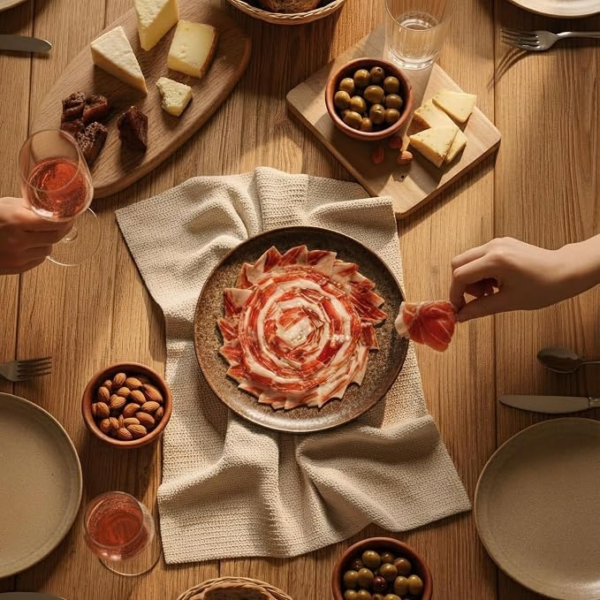


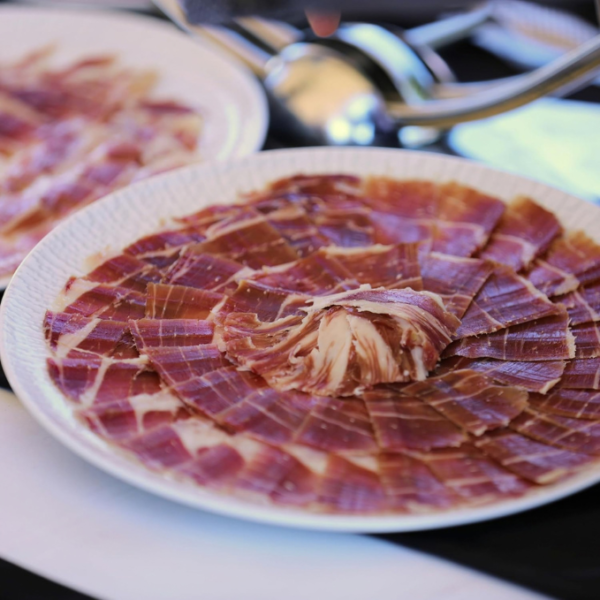
In Spanish charcuterie, the distinction between ham leg (jamón) and ham shoulder (paleta) is straightforward: jamón comes from the hind leg of the pig; paleta comes from the front leg. The front leg is smaller, which means a shorter curing time is needed to develop flavor — and a lower price point for the buyer. The flavor profile of a well-cured paleta is similar to its jamón equivalent: deep, savory, and complex, with the characteristic fat marbling of the Iberian breed. The difference is in intensity and persistence — the jamón leg tends to be slightly more developed, while the paleta offers a cleaner, more immediate flavor that many find equally satisfying.
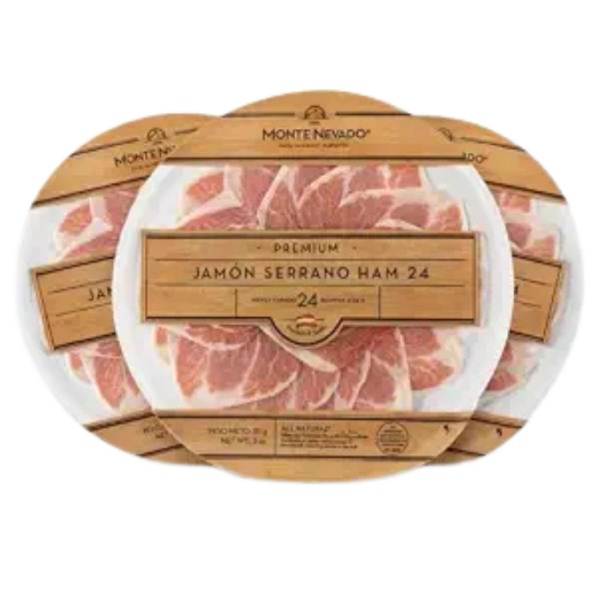
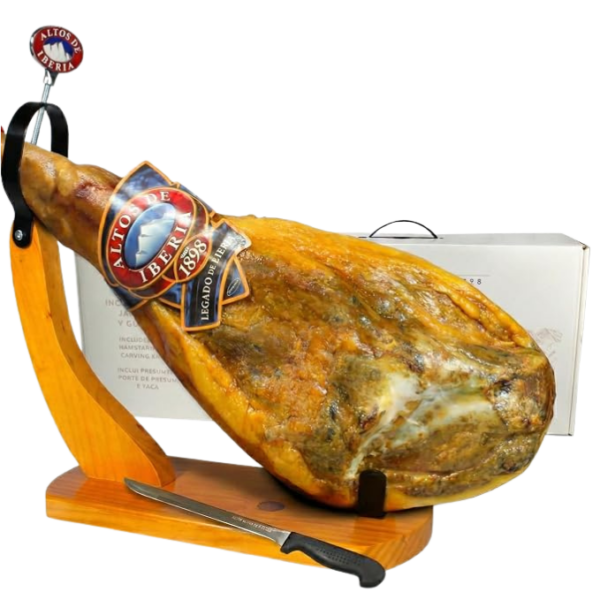
For anyone who wants the experience of carving a whole ibérico piece without committing to a full ham leg, the paleta is the right starting point. This one comes from 50% Iberian breed pigs raised on a diet of cereals and legumes, cured for an average of 24 months under Monte Nevado’s 125-year-old selection and curing standards.
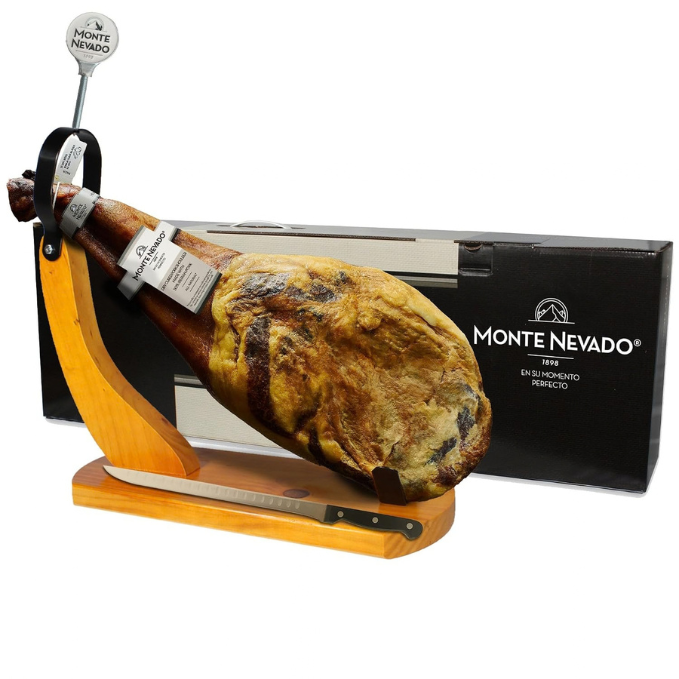
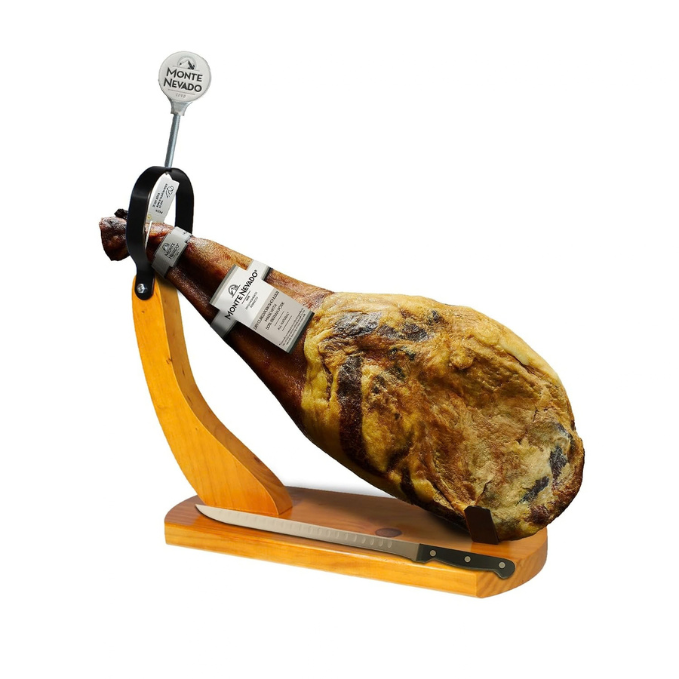
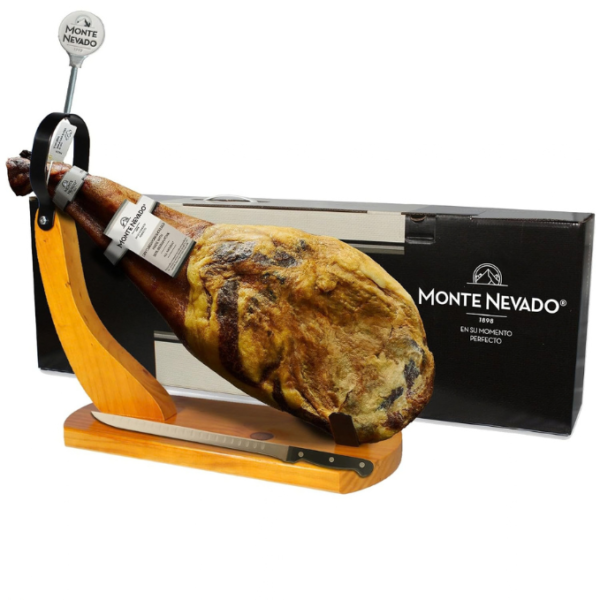
Everything you need to carve — included in the box
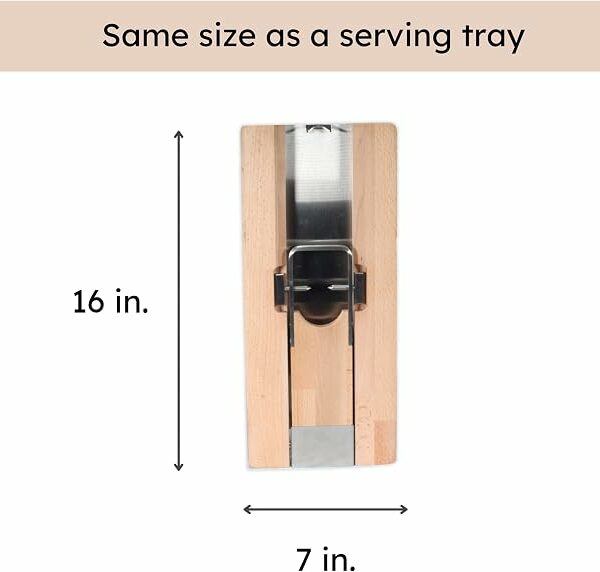
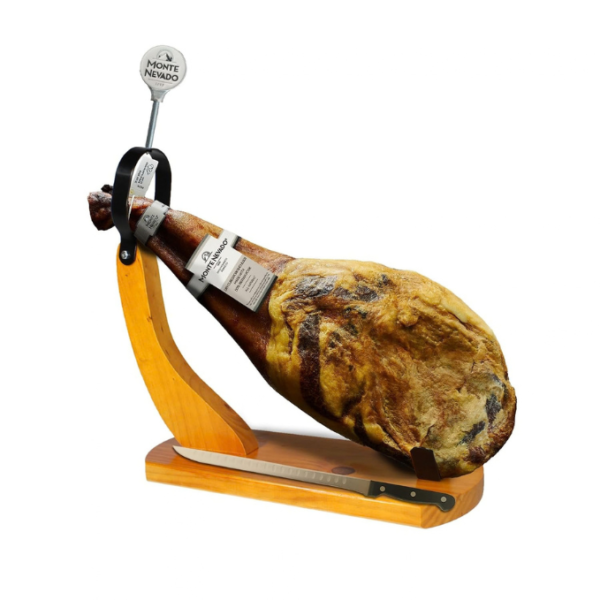
The set includes the shoulder leg, a ham stand, and a carving knife. The stand holds the piece at the correct angle for slicing and keeps it stable throughout the carving process. The knife is long, narrow, and flexible — designed specifically for the thin, clean cuts that preserve the fat distribution and texture of the meat. No additional tools needed. Mount the piece, secure it on the stand, and start carving.
Two ingredients: Iberian pork and Mediterranean sea salt
Nothing else. No nitrates. No gluten. No allergens. No GMOs. No hormones added. The curing process relies entirely on the quality of the raw material, the precision of the salt application, and 24 months of natural air-drying in Monte Nevado’s mountain drying rooms in Segovia. A clean label on an ibérico product is not the default — here it is the standard, maintained since 1898.
125 years of selection and slow curing
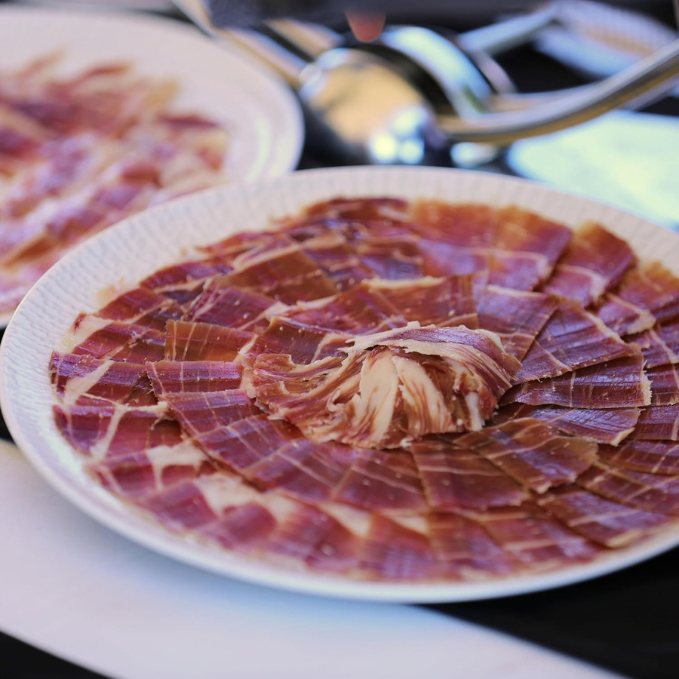
Since 1898, Monte Nevado has worked with the best Iberian pig farms in Spain, selecting animals at origin based on breed purity, growth rate, and fat composition. Each piece is reviewed individually — not by batch — by the master curers, who decide when it has reached its optimal point. The 24-month average curing time produces a paleta with balanced flavor, soft marbling, and a finish that holds throughout the piece, from the first slice to the last.